
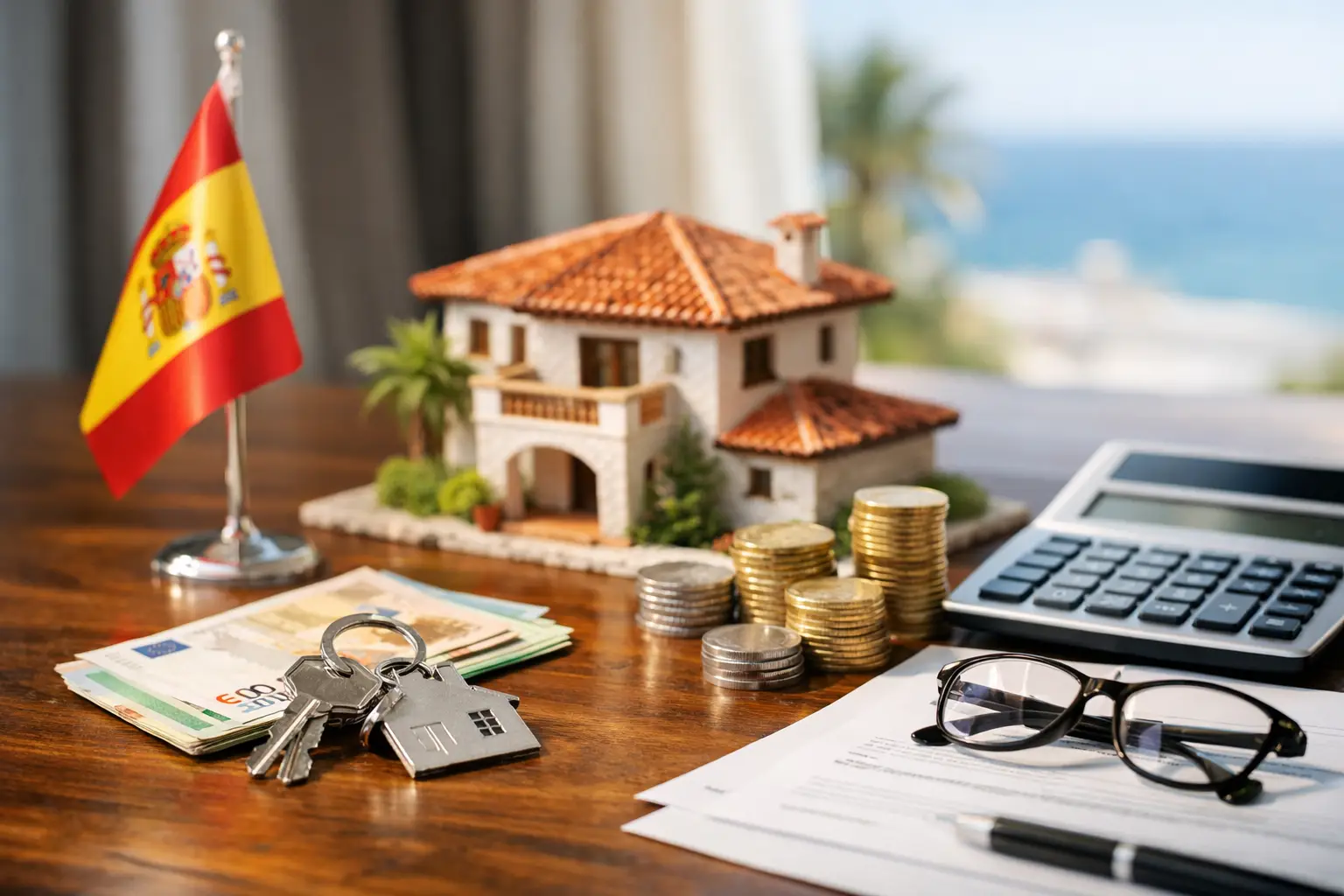
A property can look comfortably within budget until the purchase costs are added on top. That is why foreign buyer closing costs in Spain should be one of the first figures you calculate, not one of the last. For overseas buyers looking at a golf resort home, coastal flat or villa in the Murcia region, knowing the true cost of completion helps you avoid surprises and make sensible decisions from the start.
The short version is simple. In Spain, the agreed purchase price is not the full amount you will pay. Buyers also need to budget for transfer tax or VAT, notary fees, land registry fees, legal costs and, in some cases, mortgage-related charges. The exact total depends mainly on whether you are buying a resale or a new-build property, the purchase price and whether finance is involved.
How much are foreign buyer closing costs in Spain?
As a working guide, most overseas buyers should allow around 10 to 14 per cent on top of the purchase price. That range is broad for a reason. A cash buyer purchasing a resale property may come in towards the lower end, while a buyer taking a mortgage or purchasing a new-build could move higher.
This is where many buyers get caught out. They hear that costs are “around 10 per cent” and assume that applies to every purchase. It does not. Spain has different tax treatments depending on the property type, and mortgage costs can shift the final figure again. A proper estimate should be prepared for the specific property before you commit.
The main closing costs foreign buyers pay
Transfer tax on resale property
If you buy a resale home in Spain, the largest extra cost is usually transfer tax, known as ITP. This is charged as a percentage of the purchase price or the tax authority’s assessed value, depending on which is higher. Rates vary by region.
For buyers in Murcia, this is a key figure to check early because it has the biggest effect on the overall budget. On a resale purchase, it will usually account for the majority of your closing costs. If you are comparing several properties, especially across different price points, this tax can materially change which option feels best value.
VAT and stamp duty on new-build property
New-build homes are taxed differently. Instead of transfer tax, buyers generally pay VAT, known in Spain as IVA, plus stamp duty, known as AJD. Together, these can add a significant amount to the purchase.
This does not mean new-build is automatically the more expensive option overall. Sometimes a new property offers lower maintenance, stronger energy performance or developer incentives that help offset some of the extra buying costs. But from a completion-budget point of view, you should expect the tax structure to be different and usually more substantial upfront.
Notary fees
The title deed is signed before a Spanish notary, and there is a fee for this service. Notary charges are regulated and usually depend on the value and complexity of the transaction.
In most cases, notary fees are not the biggest line item, but they are still part of the completion total and should be included in your estimate. Buyers are sometimes surprised by how many smaller administrative costs add up around the main tax payment.
Land Registry fees
Once the purchase completes, the new ownership is registered at the Land Registry. This is another standard closing cost and, like notary fees, tends to vary according to the property value and transaction details.
Although it is a routine fee, registration is not a formality to treat lightly. Proper registration is part of securing your legal title, which matters even more when you are buying from abroad and may not be in Spain full-time.
Legal fees
Independent legal advice is one area where trying to save money can be costly later. A solicitor handling your purchase should check ownership, debts, planning matters, community rules, utility issues and the contract terms before you complete.
Legal fees are normally charged either as a fixed fee or as a percentage, depending on the firm and the scope of work. For international buyers, especially those not familiar with Spanish conveyancing, this is one of the most valuable parts of the process. Good legal support is not just paperwork. It is protection.
Mortgage costs for foreign buyers
If you are financing the purchase, there may be additional costs linked to the mortgage. These can include a valuation fee and certain bank or administrative charges, depending on the lender and the mortgage product.
This is one of the clearest examples of why broad rules can mislead. Two buyers purchasing identical properties may end up with different total costs if one is a cash buyer and the other is borrowing. Mortgage offers for non-residents can also differ from domestic lending terms, so the numbers should be reviewed carefully before you agree your overall budget.
It is also worth remembering that the bank may not lend against the full purchase amount. Foreign buyers often need a larger deposit, and the closing costs are usually paid from your own funds rather than financed through the mortgage.
Other costs that matter at completion
There are a few additional expenses that may appear around the point of completion, depending on the property and how the purchase is structured. These can include NIE applications if not already arranged, bank-related setup costs, translation support, power of attorney documents if you are not attending in person, and initial utility connection or changeover charges.
None of these is usually the largest expense on its own. Taken together, though, they can push the total beyond what a buyer expected if no one has prepared a full estimate in advance.
Resale versus new-build – which is cheaper to buy?
From a pure closing-cost perspective, resale properties often look more attractive because transfer tax can work out differently from the VAT and stamp duty charged on new-build homes. But the better choice depends on what happens after completion as well.
A resale home on an established resort may come fully furnished, with mature surroundings and a clear picture of community costs. A new-build may need furniture, air conditioning packages, window coverings or other extras, even if the property itself is pristine. So while this article focuses on foreign buyer closing costs Spain, buyers should also compare post-purchase spending, not just completion-day fees.
How to budget properly before you reserve
The safest approach is to work backwards from your total available funds. If your maximum budget is a fixed figure, not all of that can go towards the property price. Part of it must be ring-fenced for taxes and fees.
For example, if a buyer has a set amount in savings and assumes every euro can go on the purchase price, they may later find they need to reduce the property budget to cover completion costs properly. This is a common issue for overseas clients who are trying to compare Spain with buying practices in their home country.
Before placing a reservation deposit, ask for a clear purchase cost breakdown for that specific property. Not a rough percentage. Not a generic rule. A line-by-line estimate based on whether the home is resale or new-build, whether a mortgage is involved and which region the property sits in.
That level of clarity is especially useful when comparing golf resort properties, village homes and coastal homes, because the lifestyle choice may be emotional, but the purchase decision still needs to work on paper.
Common mistakes foreign buyers make
The most frequent mistake is focusing only on the sale price. After that, buyers often underestimate legal work, assume all taxes are the same across Spain, or forget that mortgage costs may sit outside the bank loan.
Another issue is leaving cost planning too late. By the time a buyer falls in love with a property, objectivity can slip. It becomes tempting to stretch the budget and hope the extras are manageable. A better approach is to get the full numbers first, then decide whether the property still makes sense.
This is where experienced local guidance matters. A good agent and solicitor should help you see the full picture early, including the trade-offs. Sometimes the right answer is proceeding confidently. Sometimes it is renegotiating. Sometimes it is stepping back and choosing a better-fit property.
For most buyers, the process feels much easier once the unknowns are turned into real figures. If you understand the taxes, fees and mortgage extras before you commit, you can focus on choosing the right home rather than worrying about what completion day might cost. That makes for a calmer purchase and, usually, a better one.



Join The Discussion