
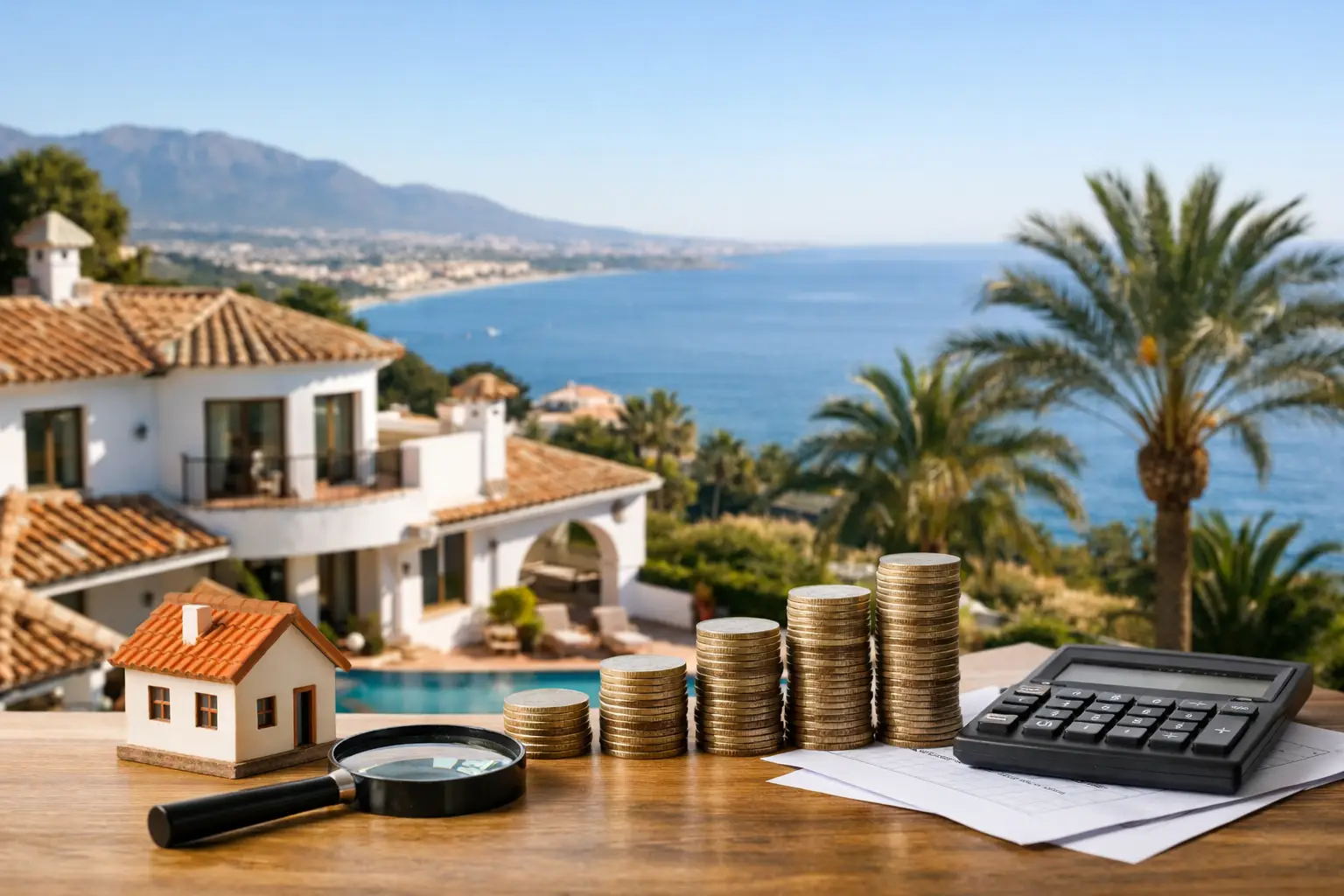
If you are working out your budget for a home in Spain, one of the first sensible questions is: what are Spanish property taxes? The short answer is that there is not just one tax. You will usually face a mix of purchase taxes, annual local taxes and, depending on how you use the property, possible income or non-resident taxes as well.
This is where many overseas buyers get caught out. They focus on the agreed purchase price, then realise later that the true cost of ownership is higher. The good news is that the system is manageable once you know which taxes apply, when they are paid and where the percentages can vary by region.
What are Spanish property taxes when you buy?
The tax you pay at purchase depends mainly on whether you are buying a resale property or a brand-new one from a developer.
If you buy a resale property, the main tax is Transfer Tax, known in Spain as ITP. This is usually charged as a percentage of the declared purchase price. The rate is set by the regional government, so it can differ depending on where the property is located. In Murcia, buyers should always check the current regional rate before committing, as rules and reduced-rate cases can change.
If you buy a new-build property from a developer, you do not normally pay ITP. Instead, you pay VAT, known in Spain as IVA, plus Stamp Duty, called AJD. For standard residential property, IVA is commonly 10%, while AJD is a separate percentage that also varies by region.
This matters because the difference between resale and new-build buying costs can be significant. A new home may offer modern finishes and lower maintenance in the early years, but the upfront tax bill can be higher. A resale property may come with a lower purchase tax in some cases, but older homes can bring refurbishment costs. Tax is only one part of the decision, not the whole picture.
The other buying costs people often bundle in with tax
Strictly speaking, not every purchase cost is a tax, but buyers often group them together because they are paid at the same stage. Alongside ITP or IVA and AJD, you should usually allow for notary fees, Land Registry fees and legal fees.
If you are taking a Spanish mortgage, there may also be valuation costs and lender-related charges to factor in. The exact amount depends on the property, the lender and the structure of the purchase.
As a working rule, many buyers set aside roughly 10% to 15% on top of the purchase price to cover taxes and associated buying costs. Where you fall in that range depends largely on the region, whether the property is new or resale, and whether finance is involved.
Annual taxes after completion
Once you own the property, the tax story does not end there. The most common annual tax is IBI, which is a local council property tax. It is similar in principle to a rates-style charge based on the cadastral value of the property rather than its open market value.
IBI varies from one municipality to another, so the amount for a golf resort property can differ from a home in a nearby coastal town. It is usually not a huge figure compared with purchase tax, but it is a fixed ownership cost that needs to be budgeted for every year.
You may also hear about rubbish collection charges or local waste taxes. These are not always described in the same way from one area to another, but they are another regular ownership cost to expect. Again, they are local charges rather than a national tax applied in one standard format across Spain.
What are Spanish property taxes for non-residents?
If you are not tax resident in Spain, there is another point to understand. Even if you do not rent out your Spanish home, you may still have to pay non-resident income tax based on the property.
This surprises many buyers, especially those purchasing a holiday home for personal use. Spain treats the benefit of owning and using that property as an imputed income in some cases. The amount is usually modest, but it still needs to be declared properly.
If you do rent out the property, the position changes. Then you may be taxed on the rental income instead. The exact calculation depends on your residency status and whether allowable expenses can be offset. Rules can differ depending on whether you are resident in an EU or EEA country or elsewhere, so this is one area where tailored tax advice is particularly worthwhile.
For owners planning to let a property on a golf resort or along the coast, this is not just about tax compliance. It also affects the real net return from the property. Gross rental figures can look attractive, but your true return depends on tax, community fees, management costs, maintenance and occupancy levels.
Capital gains tax when you sell
Spanish property taxes also come into play when you sell. If you make a profit on the sale, you may be liable for Capital Gains Tax. The rate depends on your status and the size of the gain, and the taxable amount is based on more than the simple difference between purchase and sale price.
Certain acquisition and sale costs, as well as qualifying improvement works, may affect the calculation. That is one reason why it is sensible to keep invoices and paperwork from the day you buy.
Non-resident sellers should also know about the 3% retention rule. In many sales involving a non-resident owner, the buyer is required to retain 3% of the purchase price and pay it to the Spanish tax authorities on the seller’s behalf. This is not necessarily the final tax due, but it acts as an advance payment against any capital gains liability.
There is also a local tax often referred to as Plusvalía. This is based on the increase in the cadastral value of the land over the period of ownership. It is separate from Capital Gains Tax and usually payable to the local council. The way it is calculated has changed in recent years, so the figures should always be checked case by case.
Taxes that depend on how you own the property
Not every owner is in the same position. A retired couple buying a holiday flat for occasional use will not be taxed in exactly the same way as an investor buying several units for short-term lets.
If the property is owned personally, the usual non-resident and sale-related rules will generally apply. If it is held through a company or used as part of a wider business structure, different tax issues can arise. Most lifestyle buyers do not need complex ownership structures, and in some cases they can create more administration than benefit.
This is where practical advice matters more than generic internet guidance. The right setup depends on your residency, inheritance planning, intended use of the property and whether rental income is part of the plan.
Why regional detail matters
One of the biggest misunderstandings around Spanish property taxes is assuming the whole country works on a single fixed schedule. Spain has national taxes, regional taxes and local charges, all interacting with each other.
So if you are comparing homes in different parts of Spain, the tax picture may not be identical. Even within the same broad budget, the upfront cost of a new-build can differ from a resale, and annual charges can vary by municipality.
For buyers looking in Murcia and the surrounding resort and coastal markets, this is especially relevant because many purchases are lifestyle-led. You might be choosing between a lock-up-and-leave golf property, a larger villa with a pool, or a coastal flat intended for holiday rentals. Each comes with its own pattern of tax and running costs.
How to budget sensibly before you commit
The safest approach is to ask for a full buying-cost estimate before paying a reservation fee. That estimate should separate purchase tax from legal fees, notary and registry charges, mortgage-related costs and expected annual ownership costs.
You also want clarity on what happens after completion. Ask what the annual IBI is, whether there are waste charges, what the community fees are and whether non-resident tax will apply in your case. If you expect to rent the property, build in a realistic allowance for tax and compliance from the beginning rather than treating rental income as pure profit.
At Premier Properties, this is often where buyers feel most reassured. Clear numbers reduce uncertainty, and they help you compare properties properly rather than choosing on headline price alone.
Spanish property taxes are not a reason to avoid buying, but they are a reason to plan carefully. When the tax position is explained clearly from the start, you can make decisions with confidence and focus on whether the property truly fits your lifestyle, your budget and your long-term plans in Spain.


Join The Discussion