

A well-located property can still disappoint as a holiday let if it feels sparsely equipped, difficult to use or poorly maintained. Knowing how to furnish rental property Spain is less about filling every room quickly and more about creating a comfortable, durable home that photographs well, earns positive reviews and is manageable from abroad.
For owners in Murcia golf resorts and along the Costa Cálida, the strongest furnishing decisions reflect the way guests actually stay. They want easy arrivals, cool bedrooms, practical outdoor space and enough equipment to settle in without a shopping trip. The aim is not a showroom. It is a rental home that works reliably in summer heat, during short golf breaks and for longer winter stays.
Start with the rental strategy, not the furniture
Before ordering a sofa or choosing a colour scheme, decide who the property is for. A two-bedroom flat aimed at couples on a long weekend needs a different setup from a three-bedroom villa marketed to families, golfers or winter sun guests. Your expected nightly rate, booking length and seasonality should guide the budget.
A property intended mainly for personal use can be more individual, but a dedicated holiday rental needs broad appeal. Neutral walls, comfortable seating and simple, coordinated furnishings generally age better than highly personal choices. This does not mean making it bland. A warm palette, local artwork and good lighting can give a home character without making it difficult for guests to imagine themselves there.
Also consider how the property will be managed. If you live overseas, every unusual fitting, delicate fabric or difficult-to-source item creates an extra problem when something breaks. Standard sizes, replaceable items and clear product records save time for both you and your property manager.
Make the layout work for paying guests
Rental value is often lost in the small practical details. Guests notice whether there is somewhere to put a suitcase, charge a mobile phone, hang a towel or prepare a proper meal. Walk through the home as if you had arrived late at night with children, golf clubs or beach bags.
In the living area, prioritise enough comfortable seating for the advertised occupancy. If a property sleeps six, seating for only four feels misleading. A dining table should accommodate the same number of guests, even if a compact extending table is the sensible answer. Avoid blocking routes to the terrace, as indoor-outdoor flow is a major part of Spanish holiday living.
Bedrooms should have supportive mattresses, bedside tables or shelves, reading lamps and sufficient wardrobe space. Blackout blinds or curtains are particularly worthwhile for summer mornings and guests adjusting to travel schedules. In smaller rooms, a wall-mounted light and narrow bedside shelf may work better than a bulky table.
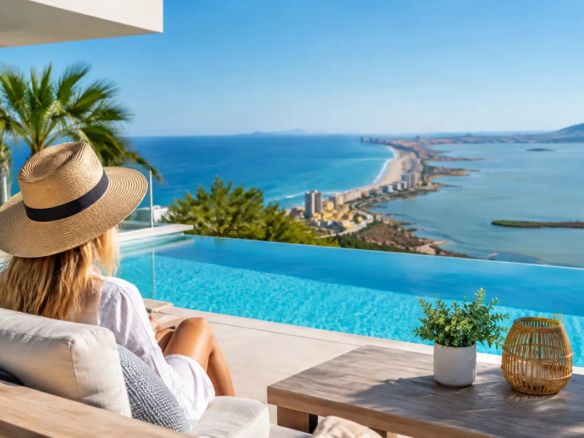
Do not treat the terrace as an afterthought. For many Costa Cálida bookings, it is the feature that sells the property. Provide a proper outdoor dining set, comfortable chairs and shade where permitted. Check community rules before fitting awnings, screens or permanent structures. Materials should withstand strong sun, dust and occasional coastal air.
Spend where comfort and durability matter most
A sensible furnishing budget is not simply the cheapest total at checkout. Replacing a poor-quality sofa, bed or dining chairs after one busy season is more expensive than buying mid-range, rental-suitable pieces at the outset.
Put the largest share of the budget into mattresses, sofas, dining seating, air conditioning where required, window coverings and outdoor furniture. These items shape comfort, reviews and the appearance of listing photographs. Choose wipeable or easy-clean upholstery, removable covers where practical and tables that do not mark easily from glasses, sun cream or children’s activities.
There are areas where you can spend less without reducing guest satisfaction. Side tables, decorative cushions, lamps, mirrors and artwork can be chosen economically, provided they are secure and coherent. Keep a modest reserve for replacements, as glassware, linens and small appliances are operational costs rather than one-off purchases.
It is usually better to furnish every room to a consistent, functional standard than to create one impressive room and leave the rest under-equipped. A clean, comfortable property with good beds and a complete kitchen will outperform a stylish home that feels unfinished.
Equip the kitchen for real stays
Guests do not expect a professional kitchen, but they do expect to cook breakfast, make drinks and prepare straightforward meals. A few mismatched plates and one small saucepan quickly lead to poor feedback, especially from families and long-stay visitors.
Supply enough crockery, cutlery and glasses for more than the maximum occupancy, allowing for breakages and dishwasher cycles. Include cookware in a range of sizes, oven dishes, chopping boards, sharp knives, a kettle, toaster, coffee-making option, microwave and adequate fridge storage. If there is a dishwasher, provide clear instructions and suitable tablets for the first few uses.
The same thinking applies to laundry. A washing machine is a significant advantage for beach holidays and extended stays. Provide an airer, pegs and, where appropriate, an iron and ironing board. Make certain appliances have accessible instructions in English as well as any original Spanish manual.
Build a guest-ready essentials package
The best rentals remove small points of friction. Guests should not need to contact the manager because they cannot find a hairdryer, operate the television or locate the bins. The following items are worth including from day one:
- Reliable Wi-Fi, with the network name and password clearly displayed.
- A hairdryer, full-length mirror, hangers and basic bedroom storage.
- Spare keys or an approved key-safe arrangement managed securely.
- A first-aid kit, fire blanket or extinguisher where appropriate, and clear emergency information.
- Cleaning tools, spare light bulbs, batteries and a basic toolkit for the management team.
- A welcome folder explaining appliances, air conditioning, waste disposal, pool rules and local contacts.
Check current legal and insurance requirements for your property type and rental model. Registration, licensing, guest reporting and safety obligations can vary by region, municipality and community of owners. Furnishing should support compliance, not be treated separately from it.
Choose a style that photographs well but stays practical
Natural light, pale walls and a limited colour palette tend to work well in Spanish rental photography. They make compact flats feel larger and suit the bright Mediterranean setting. Add colour through cushions, throws, prints and outdoor accessories that can be replaced easily.
Avoid overcrowding. Too many ornaments make cleaning slower, increase breakage and can make a property look dated online. One or two well-chosen mirrors, a large piece of art and attractive textiles are often more effective than shelves full of decorative objects.
If the property has a golf, pool, sea or mountain view, arrange furniture to make the most of it. Guests book the lifestyle as much as the square metres. Equally, do not hide practical items entirely for the sake of photographs. A visible dining space, useful storage and an inviting terrace help guests understand how they will use the home.
Plan delivery, assembly and aftercare from overseas
Furnishing from another country is possible, but it needs organisation. Create a room-by-room schedule with measurements, delivery dates, assembly requirements and a list of who will receive each order. Check lift sizes, parking access, stairways and resort entry arrangements before purchasing large pieces.
It is wise to photograph every completed room and retain receipts, guarantees and product details. An inventory with replacement sources is particularly useful for rental management. When a dining chair or lamp is damaged, the goal is to replace it quickly without changing the look of the whole property.
For a larger project, local support can prevent costly errors. A team on the ground can measure rooms, coordinate deliveries, inspect workmanship and make sure the home is stocked before photography or the first guest arrival. Premier Properties can help owners coordinate furnishing and rental preparation through trusted local partners, particularly where a purchase, refresh and letting plan need to move together.
Review the property after the first season
Your first bookings will reveal what the original plan missed. Read reviews carefully, ask your manager which items generate questions and inspect the property between stays if possible. You may find that extra outdoor chairs, better pillows, more kitchen storage or a larger drying rack produce a bigger return than another decorative purchase.
A successful Spanish rental is never fully finished. It should be refreshed, checked and improved as guest needs become clear. Furnish for comfort first, choose durable pieces second, and keep every decision practical enough to manage from wherever you call home.



Join The Discussion