
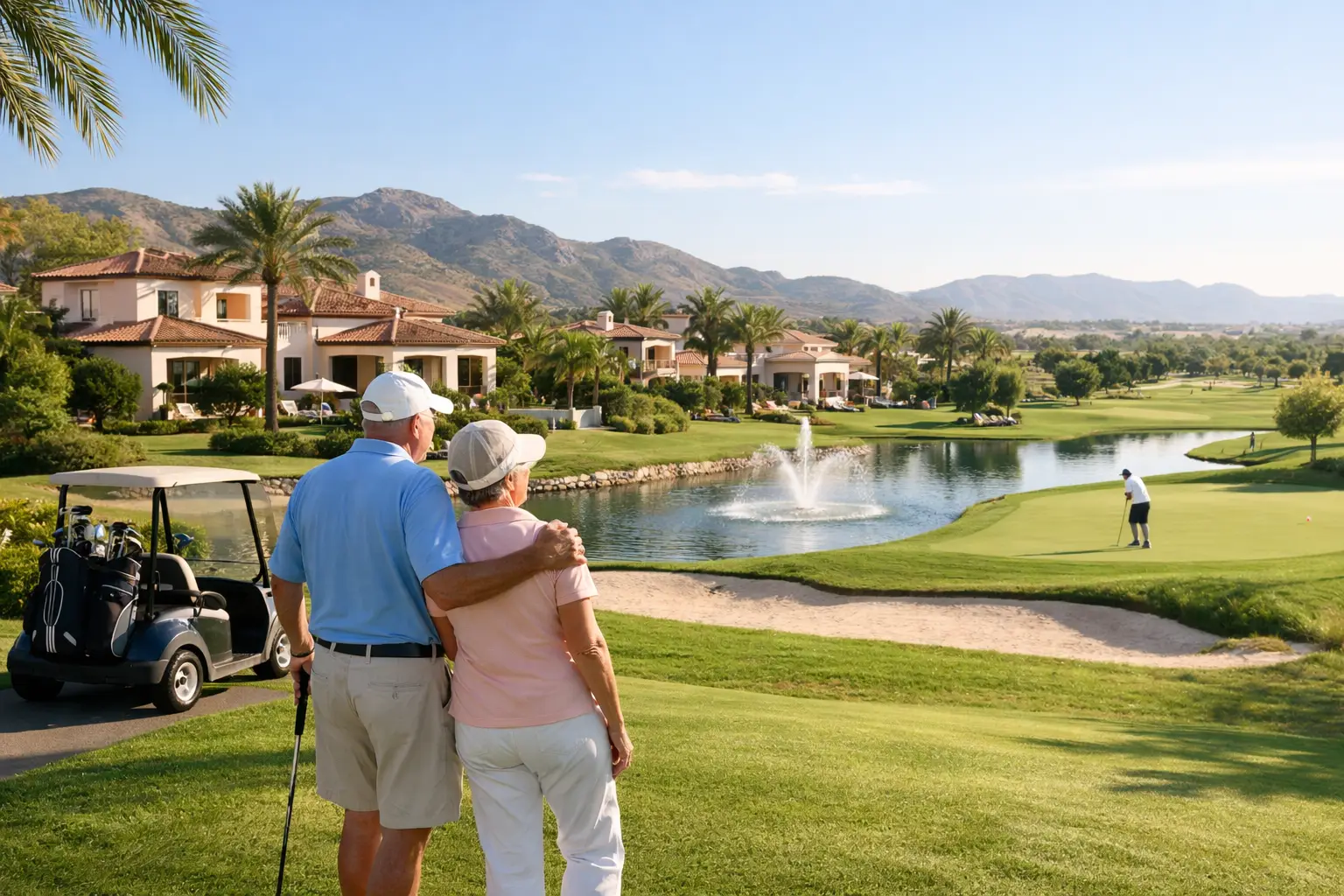
Retirement property decisions rarely come down to the golf course alone. The best golf homes for retirees are usually the ones that still feel practical on a Tuesday in February – easy to lock up, comfortable in every season, close to essentials, and simple to manage if you are spending part of the year back in the UK.
That is why the right choice is not always the biggest villa or the property with the best view of the fairway. For many buyers, it is a home that balances lifestyle with convenience, ongoing costs and peace of mind. In Murcia and the wider Costa Cálida area, that balance can be found, but it helps to know what to prioritise before you start viewing.
What makes the best golf homes for retirees?
Retirees tend to buy differently from holiday-home buyers in their forties or investors focused only on rental yield. The brief is usually broader. You may want sunshine, golf and outdoor space, but you are also thinking about healthcare access, travel times, community, stairs, heating and cooling costs, and whether the property will still suit you in ten years.
A good retirement home on a golf resort should make daily life easier, not more complicated. That usually means manageable internal space, sensible outdoor areas, and a setting that feels secure without becoming isolated. Many buyers arrive assuming they want a detached villa, then realise a well-positioned ground-floor flat or townhouse actually suits their routine far better.
The strongest retirement purchases usually share a few features. They have straightforward access, enough outside space to enjoy the weather without constant upkeep, and a location that works whether you play golf three times a week or not at all. Golf may be the attraction, but long-term comfort is what makes the decision a good one.
Flats, townhouses or villas?
This is often the most important choice, because it affects both budget and day-to-day living.
Flats for easy upkeep
For many overseas retirees, a flat on a well-kept resort is the most practical option. Community maintenance is handled, external areas are looked after, and lock-up-and-leave ownership is simpler if you split your time between Spain and home. A ground-floor flat can be especially attractive if mobility is a consideration, provided the layout and access are genuinely step-free.
The trade-off is outside space and privacy. You may gain convenience, but lose the larger terraces, gardens or private pools that some buyers picture when they first start searching.
Townhouses for balanced living
Townhouses often sit in the middle. They can offer more room than a flat, a private terrace or small garden, and lower maintenance than a large detached home. For couples who expect regular visitors, that extra flexibility can be valuable.
The main point to check is stairs. A townhouse may work perfectly now, but if you are buying with a ten to fifteen year view, it is worth being honest about whether a multi-level layout still makes sense.
Villas for space and privacy
Villas appeal for obvious reasons – more privacy, more outdoor living, and often a stronger sense of having your own base in the sun. In the right setting, a single-level villa can be one of the best golf homes for retirees, especially if you want year-round living or frequent family stays.
But a villa also brings more responsibility. Gardens, pools, exterior upkeep and higher running costs need to be factored in properly. If you love the idea of a villa but do not want the maintenance burden, it is worth focusing on smaller plots or homes where support services are easy to arrange.
Best golf homes for retirees by lifestyle
Different resorts and property types suit different retirement plans. The right question is not simply, which resort is best? It is, which setup fits the way you actually want to live?
If you want a social environment with a clear community feel, established golf resorts can work very well. You are more likely to find neighbours in a similar stage of life, regular activity, and an environment where spending part of the year abroad feels normal rather than unusual. This can be especially reassuring for buyers relocating from overseas for the first time.
If you want peace and a slower pace, lower-density developments or homes on the edge of resort communities may be a better fit. Some retirees want access to golf and facilities without feeling surrounded by constant holiday traffic in peak season.
If you expect children and grandchildren to visit often, think about airport access, nearby beaches, pool arrangements and sleeping space. A home that feels ideal for two people in winter may feel cramped in August. On the other hand, buying for occasional guests rather than your own everyday comfort is a common mistake.
If rental income matters, your shortlist may need to change again. Some homes are easier to let than others due to layout, terrace size, pool access or resort popularity. But retirement buyers should be careful not to over-prioritise rental appeal if the main goal is personal enjoyment.
Practical checks that matter more than buyers expect
A property can look excellent in photographs and still be wrong in practice. This is where experienced, local guidance makes a real difference.
Start with orientation. It affects how much winter sun you get, how usable the terrace is, and whether the house feels bright in the months when you are most likely to spend longer periods in Spain. South-facing and south-west-facing homes are often popular with retirees for good reason.
Then look closely at access. Are there steps to the entrance? Is parking straightforward? How far is the walk to facilities? A beautiful home can become inconvenient if every daily movement involves stairs or a long walk in high heat.
Storage is another detail that becomes more important with age and longer stays. Owners who spend months at a time in Spain usually need practical storage for golf clubs, suitcases, outdoor furniture cushions and general household items.
Do not ignore winter comfort. Murcia has a mild climate, but properties still need proper heating, good air conditioning and, ideally, features that make them pleasant all year rather than only in midsummer. Older homes sometimes need updating in this area, and that should be costed honestly.
Running costs and the real budget picture
The purchase price is only part of the story. For retirees, predictable ownership costs are often just as important.
Community fees can be excellent value if they cover security, pools, gardens and shared-area maintenance, but they do vary. A lower purchase price in one development may be offset by higher ongoing charges. Villas with private pools and gardens may reduce community dependency but increase your own maintenance commitments.
You also need to account for utilities, property tax, insurance and any management support if you are away for part of the year. If the property needs furniture upgrades, air conditioning replacement, a new kitchen or bathroom improvements, it is better to include those figures early rather than treat them as minor extras.
Many overseas buyers benefit from treating the purchase as a full project rather than a single transaction. That includes legal work, mortgage advice where relevant, furnishing, snagging, maintenance planning and, if needed, rental preparation. Having one point of contact to coordinate those parts can remove a lot of uncertainty.
Why location still matters beyond the resort gates
Even buyers focused on golf should think beyond the course itself. The best retirement home is one that works in ordinary life.
How long does it take to reach shops, restaurants, beaches, medical services and the airport? Does the area stay active year-round, or does it become very quiet outside the main season? Are you happy to drive regularly, or would you prefer more facilities nearby?
Across Murcia’s golf resorts, the answers vary. Some developments are better for buyers who want a self-contained environment. Others suit those who see the resort as their home base but plan to spend plenty of time exploring the surrounding towns and coastline. Neither is better in absolute terms. It depends on how independent or connected you want your day-to-day life to feel.
Buying with the long term in mind
A retirement purchase should work now, but also later. That does not mean being overly cautious. It means choosing with clarity.
Ask yourself whether the property would still suit you if your mobility changed slightly, if you spent longer periods in Spain, or if maintaining a large outdoor space stopped being enjoyable. Think about resale as well. Homes with practical layouts, good sun orientation and broad appeal tend to remain easier to sell if your plans change.
This is one reason many buyers benefit from a more consultative property search. The best advice is not simply about showing available stock. It is about narrowing options based on how you plan to live, what you want to spend, and which compromises are sensible for you.
For retirees buying in an unfamiliar market, that support matters. A good agent should be able to explain not just what is available, but why one property may be a stronger fit than another once costs, convenience and long-term comfort are weighed properly.
Premier Properties works with many overseas buyers in exactly this position, helping them compare resort homes honestly and manage the buying process from search through to the practical details that follow completion.
The right home should make retirement feel simpler, not busier. If a property gives you sun, space, an enjoyable community and a setup you can manage with confidence, you are usually looking in the right direction.


Join The Discussion