
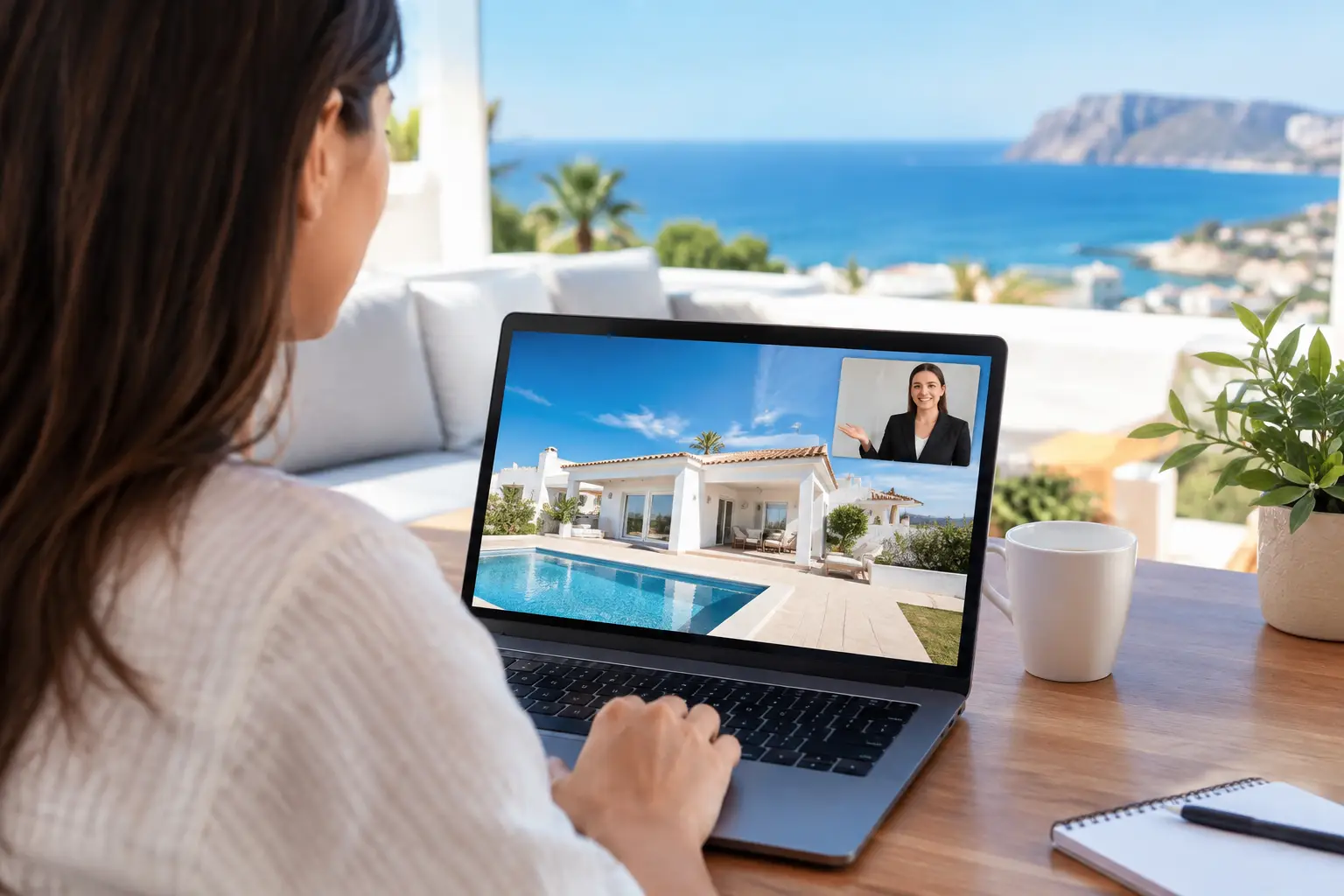
A bright terrace and a well-presented lounge can look excellent on a listing portal. They tell you far less about road noise, the walk to the nearest shop, the condition of the communal pool or whether the views shown are genuinely available from the property. When you arrange remote property viewings, the objective is not simply to see a home on screen. It is to gather enough honest, useful information to decide whether it deserves your time, travel and a possible offer.
For buyers based in the UK and elsewhere overseas, a properly managed video viewing can narrow a long list quickly. It can also prevent expensive disappointment. The difference lies in preparation, the questions asked and the willingness of the agent to show the property as it is, rather than as a brochure presents it.
Start with a focused shortlist
A remote viewing works best when it is the next stage of a considered search, not the first look at dozens of unrelated properties. Before booking, be clear about the essentials: your maximum budget including purchase costs, preferred area, number of bedrooms, outdoor space, accessibility, community facilities and whether rental potential matters.
This is particularly useful in the Costa Cálida, where two properties with a similar price can offer very different lifestyles. A flat at Hacienda Riquelme may suit someone seeking a managed golf-resort setting and open views, while a home in San Pedro del Pinatar may be better for buyers who want year-round town services and access to the coast. Neither is automatically the better choice. It depends on how you intend to use the property.
Ask your agent to explain why each shortlisted home fits your brief, as well as where it may involve compromise. A good viewing begins with realistic expectations. If a property is on a higher floor without a lift, backs on to a road or needs updating, it is better to know before the camera is switched on.
How to arrange remote property viewings that answer real questions
Agree a time when you can give the viewing your full attention. A live video call is usually more valuable than a pre-recorded tour because you can direct the viewing as it happens. Allow enough time for the agent to walk through the property slowly, step outside and answer questions without rushing to the next appointment.
Request a viewing in daylight where possible. Morning and afternoon light can change the feel of a terrace, garden or living room considerably, and the sun’s position matters if you plan to spend long periods outdoors. If the orientation is important to you, ask which way the main terrace faces and how the space is used in summer and winter.
At Premier Properties, remote viewings are treated as a practical buying tool rather than a polished sales presentation. That means the visit should cover the home, its setting and the points you would inspect yourself if you were standing there.
Ask to see the approach, not just the rooms
The route into a property provides useful context. Ask the agent to start outside and show the road, parking arrangements, entrance, stairwell or lift, and the immediate surroundings. In a resort property, this may include the distance to the pool, the condition of communal areas and the position of neighbouring blocks.
For villas and townhouses, request a full view of the plot boundaries, access gate, outside storage, roof terrace stairs and any areas that are overlooked. A wide-angle view from every terrace is more useful than a close-up of the outdoor furniture.
View each room in a sensible order
A continuous walk-through is preferable to short clips of attractive corners. Ask for a view from the doorway, then a slow pan around each room. This helps you understand proportions, natural light, storage and how the rooms connect.
Do not be hesitant about asking for cupboards, wardrobes, utility spaces and the inside of kitchen units to be opened. These are everyday parts of a property, and they often reveal more about maintenance and practicality than decorative finishes do. If furniture is included, establish what is likely to remain rather than assuming that every item seen on screen forms part of the sale.
Bathrooms deserve a careful look. Ask about water pressure, ventilation, signs of damp, recent renovations and whether hot water is supplied by a boiler, electric system or solar installation. For older homes, visible seals, tiles and fittings can indicate where future work may be needed, though a video viewing is not a substitute for a professional inspection.
Be direct about condition and costs
A remote viewing should include the questions that can feel awkward in person. Ask whether there are known defects, unfinished work, recurring damp issues, air-conditioning faults or community matters that a buyer should understand. Honest advice at this stage saves time for everyone.
You should also request the key running costs for the property, including community fees where applicable, annual IBI council tax, rubbish collection and typical utility costs. For a golf resort home, establish what the community charge covers and whether there are any planned works or special assessments. Costs can vary according to property type, community services and usage, so figures should be confirmed for the individual property rather than estimated from a nearby listing.
Check the neighbourhood through a local lens
A video call cannot fully recreate the feeling of arriving in an area, but it can show you whether the location matches your plans. Ask the agent to show the street outside, nearby buildings and the route to the facilities that matter to you. If you will not have a car, distance on a map is not enough. A five-minute drive may be an uncomfortable walk in summer or impractical with shopping.
For coastal properties, ask about seasonal changes. Some locations are lively in July and August but quieter in winter, which may be ideal for one buyer and unsuitable for another. For resort properties, ask how active the community feels outside peak holiday periods and what is available locally throughout the year.
It is also sensible to ask about practical access: the nearest supermarket, medical services, airports, railway stations and beaches, as well as typical journey times. Local knowledge matters here because the most direct route is not always the most convenient one, particularly during holiday traffic.
Use documents to support what you see
A remote viewing is one part of due diligence, not the whole process. Once a property remains of interest, ask for the available documentation and have it checked through the appropriate legal process before committing funds. This commonly includes details of ownership, property registration, community information, energy performance and any relevant licences or permissions.
If you are considering finance, speak to a Spanish mortgage specialist early. Your borrowing position may influence both your budget and the timeline for making an offer. Buyers planning renovations should also obtain realistic local costings before relying on a vision created by a video tour. Cosmetic updates can be straightforward; moving plumbing, altering layouts or dealing with older installations requires a clearer plan.
For rental-minded buyers, ask questions beyond potential nightly rates. Consider licensing requirements, community rules, seasonal demand, furnishing standards, management costs and the amount of personal use you want. A property that is excellent for your own holidays may not necessarily be the strongest short-term rental choice, and that is perfectly acceptable if your priorities are clear.
Know when to visit in person
Many overseas buyers use remote viewings to reduce a list of ten properties to two or three, then travel to Spain for a concentrated viewing trip. This is often the most balanced approach. You benefit from early local guidance without making repeated exploratory journeys.
Some buyers do proceed remotely, especially when they know the resort or area well, the property is straightforward and the legal checks are satisfactory. Even then, decisions should be made carefully. A trusted representative on the ground, clear video evidence, thorough paperwork and independent legal advice are essential safeguards.
The right remote viewing leaves you with more than attractive screenshots. You should understand the property’s condition, setting, likely costs and compromises well enough to make the next decision calmly. If a question has not been answered, ask it before you book a flight or make an offer – clarity is far more valuable than pressure to move quickly.




Join The Discussion