
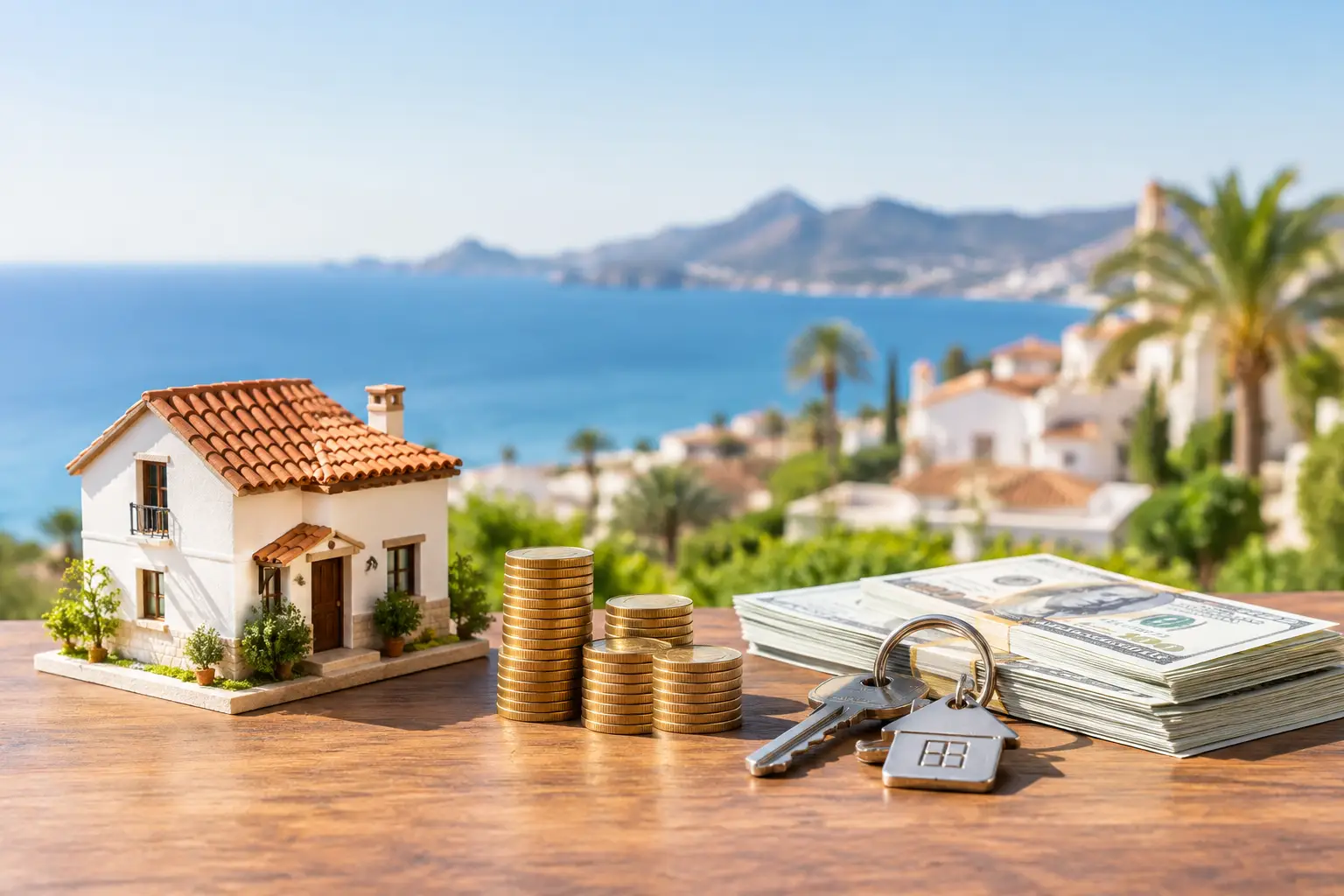
A property on Hacienda Riquelme, La Torre or near the Mar Menor may look like a straightforward purchase, but how you pay for it can shape the whole experience. The mortgage versus cash decision is not simply about whether you can afford the asking price. It affects your negotiating position, the pace of the purchase, your available funds after completion and the long-term cost of owning a home in Spain.
For many overseas buyers, paying cash feels simpler and more reassuring. For others, a Spanish mortgage keeps savings available for other investments, renovations or retirement planning. Neither route is automatically better. The sensible choice is the one that gives you enough financial comfort after all purchase and ownership costs have been allowed for.
Mortgage versus cash in Spain: start with the full budget
Before deciding how to fund a property, separate the purchase price from the total amount you will need to complete and enjoy the home. In Spain, buyers should budget for taxes, legal work, notary and Land Registry fees, plus any mortgage-related costs where finance is involved. The precise figures depend on the property type, price and region, so obtain current, transaction-specific advice before committing.
Then look beyond completion. A second home or rental property may need furniture, air conditioning, appliances, decorating, security arrangements or a modest refurbishment before it is ready to use. Resort homes also have community fees, local council tax, utilities and insurance. If you intend to rent, factor in set-up costs, ongoing management and periods when the property may be empty.
A cash buyer who uses every available pound or euro to secure the property can feel less comfortable than a buyer with a manageable mortgage and a healthy reserve. The right question is not just, “Can I pay cash?” It is, “What will my finances look like six months after completion?”
The case for buying with cash
Cash purchases are often faster because there is no lender valuation, underwriting process or mortgage offer to wait for. Once the legal checks are complete and funds are in place, the transaction has fewer moving parts. This can be particularly helpful when a seller wants a dependable buyer or when several people are interested in the same well-priced property.
A cash offer may also strengthen your position in negotiations. It does not guarantee a discount, especially where a home is accurately priced, but sellers commonly value certainty and a clear route to completion. Being able to provide proof of funds promptly is essential. Spanish legal and banking procedures require buyers to demonstrate the legitimate source of money, so organise bank statements and supporting documents early.
There is also a simple emotional benefit. Many holiday-home buyers prefer to own outright, without monthly repayments or exposure to changing interest rates. If your retirement income is fixed, or you want your Spanish home to remain a low-stress place to visit, that certainty can be valuable.
Cash does have an opportunity cost. Money tied up in a property is not available elsewhere, and property cannot be sold as quickly as cash can be accessed. Currency timing matters too. If you are converting sterling into euros, an unfavourable exchange-rate movement between agreeing a price and sending funds can materially change the real cost of the purchase.
When a Spanish mortgage can make sense
A mortgage can allow you to purchase without concentrating too much of your wealth in one property. This can suit buyers who want to retain capital for investments, maintain a substantial emergency fund, or buy a home that needs furnishing and improvement work after completion.
For non-resident buyers, Spanish lenders commonly offer a percentage of the lower of the purchase price or bank valuation, rather than funding the whole transaction. The available loan-to-value, interest rate, term and affordability requirements vary between banks and individual applicants. You will normally need to provide evidence of income, savings, existing commitments, tax residency and identification, with documents often needing formal translation or certification.
A mortgage can also provide flexibility for buyers with a clear plan. For example, a couple buying a two-bedroom golf resort property for personal holidays may choose finance so they can keep funds aside for a new kitchen, furniture package and several years of running costs. An investor may prefer not to use all available capital on one purchase, particularly if they plan to improve more than one property.
However, finance adds cost and administration. You will have monthly repayments, interest, a valuation and lender conditions to consider. The bank may require associated products such as insurance, and the offer can take time to progress. Do not assume that projected rental income will cover the mortgage. Rental income can be seasonal, while repayments and community charges continue throughout the year.
Compare certainty, not just monthly cost
A low monthly repayment can make a mortgage appear attractive, but the total cost over the life of the loan may be considerably higher than the amount borrowed. Equally, paying cash may avoid interest but leave you with less financial flexibility. Comparing both routes properly means looking at the whole picture.
With cash, calculate the purchase costs, the euro amount required, your currency-conversion plan and the reserve you will retain afterwards. With a mortgage, compare the deposit, total borrowing cost, monthly payments, likely fees and the effect of different interest-rate scenarios. Ask how the figures would feel if the property were unused or unrented for a year.
It is also worth considering your intended ownership period. If you expect to sell within a few years, the set-up costs of a mortgage may carry more weight. If the property is a long-term retirement base and repayments remain comfortably affordable, finance may be a reasonable way to preserve capital. There is no single answer for every buyer of a Costa Cálida home.
Questions to ask before choosing
Your decision becomes clearer when you answer a few practical questions honestly. How much cash must remain available after taxes, fees and furnishing? Would a change in interest rates cause concern? Are your income and documents likely to meet a lender’s requirements? Do you need to move quickly, and would a mortgage timescale put the purchase at risk?
Also consider where your funds are held. Buyers using sterling need a sensible currency plan, particularly when paying a reservation deposit and later completing in euros. A small percentage movement in the exchange rate can have a greater effect than a modest saving achieved during price negotiations.
For joint buyers, agree the approach before making an offer. One person may prioritise owning without debt, while another may value liquidity. Having that conversation early prevents finance becoming a source of pressure once a suitable property is found.
A smoother route to completion
Whether you buy with cash or a mortgage, avoid committing before the key checks are underway. An independent legal professional should review ownership, charges, licences where relevant, community matters and the terms of the contract. If you require finance, seek an early indication of borrowing capacity rather than treating a mortgage as an afterthought.
At Premier Properties, buyers can be guided through the practical stages alongside trusted legal and mortgage partners, from identifying suitable homes through to arranging the support needed after completion. That local coordination is especially useful when you are buying from overseas and cannot be in Murcia for every appointment.
The best funding choice is the one that lets you enjoy the property rather than worry about it. Keep enough money in reserve, understand every cost before you offer, and choose a payment structure that still feels comfortable when the sunshine, view and excitement of viewing day have passed.



Join The Discussion